
The Master Blueprint for Closet Door Systems: Functionality, Aesthetics, and Spatial Efficiency
Sammys
June 4, 2026
Selecting interior fixtures while designing or renovating a home typically involves balancing visually harmonious and mechanically usable considerations. Much attention is given to internal shelving, cabinetry modules and lighting, but choosing an entranceway system for your wardrobe is still one of the most important architectural requirements to consider in your redesign project. The type of entranceway system you choose will dictate not only how you access your wardrobe but also how the space around your wardrobe will function each day.
When conducting a comprehensive closet door comparison, homeowners and interior architects are faced with several distinct options, most notably sliding closet doors vs bifold systems. Each configuration carries specific implications for spatial layout, structural longevity, and user interface. This comprehensive closet door guide will dissect the leading closet door types, analyzing their mechanics, aesthetic value, and installation criteria to help you discover the ultimate closet door solutions for your next interior project.
1. A Study of Closet Door Styles: The Built Environment
The shape and dimensions of a room will dictate how the furniture, fixtures, fittings, and storage space can be used in that room. The way in which a person chooses an enclosure will depend on the style, shape, and dimensions of the closet doors selected and will take a considerable amount of thought since the way in which a person interacts with a closet door or closet door planning may differ with respect to the layout of the physical space.
Bifold Closet Door
Bifold closets are hinged together to form an accordion pattern that folds over on itself when they are opened. When the bifold doors are opened they stack against each other, utilizing an overhead track that allows them to glide to either end of the door frame. As they compress toward the ends of the door frame, the door frames become very narrow and allow an almost clear view of approximately 90% of the items inside.
- Advantage: Bifold doors provide the most closet door accessibility and maximize access to the closet contents.
- Best use: Best used where full visual access to clothing is necessary, such as for master bedrooms or deep reach-in wardrobes.
Sliding Closet Doors
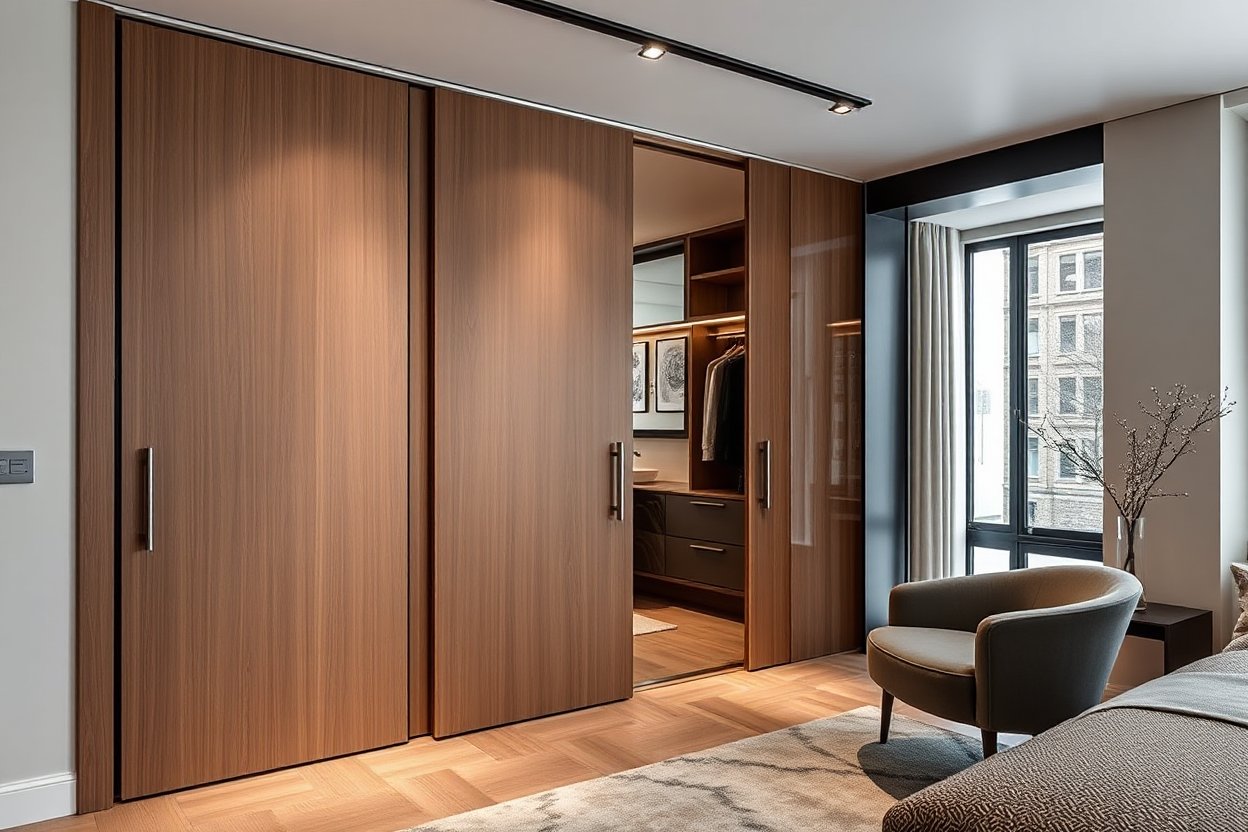
Operating on a parallel plane, sliding closet doors (often called bypass doors) consist of two or more large panels that overlap and glide horizontally behind one another along parallel closet door tracks.
- Primary Benefit: They are the quintessential space saving closet doors. Because of their movement side-to-side momentarily at the frame of the door, they do not need any floor clearance to fully open.
- Best use case: Are used typically found hallway, or closet door designs which allow the you to put furniture against the wall directly close to your wardrobe.
Hinged closet doors
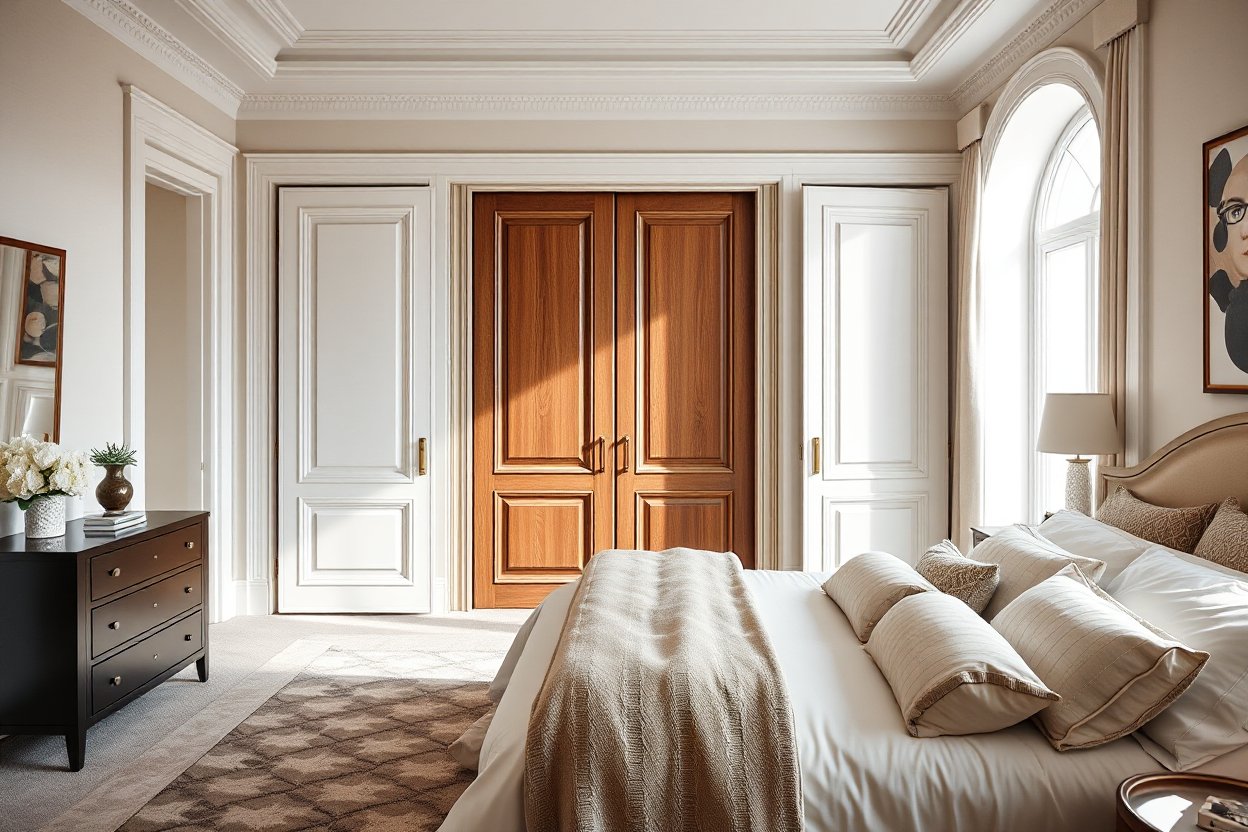
Classic hinged closet doors (doors which swing on classic side mount closet door pivots) swing into a room from a position approximately 90 degree to as much as 180 degree.
- Primary Benefit: Durable and aesthetically pleasing. Also, allows for the use of hooks, mirrors and small organizers on each door.
- Best use case: Large luxury bedrooms with large amounts of both floor space available and significant amounts of floor space available for unobstructed passage within the bedroom; these types of closets allow all of those uses.
2. Spatial Engineering: Closet Door Space Efficiency
In the field of interior spatial engineering, every square centimeter of floor space must be treated as high-value real estate. The choice between different closet door mechanisms can dramatically alter the usable layout of a bedroom.
Clearance and Closet Door Layout
When mapping out a bedroom floor plan, the closet door layout must account for what designers call the "swing radius" or "compression zone." Traditional swinging models require a clear radius equal to the width of the door leaf. If a nightstand or bedframe falls within this radius, the wardrobe becomes partially inaccessible, leading to a breakdown in closet door functionality.
By analyzing sliding closet doors vs bifold systems, we can see two distinct approaches to closet door space efficiency:
- The Lateral Glide (Sliding): This system keeps the entire operational path within a 3-to-4-inch deep channel inside the door frame. It represents the ultimate level of closet door optimization for tight footprints because it permits placement of a bed or desk mere inches from the wardrobe face.
- The Compressed Projection (Bifold): While bifolds do require some outward clearance, their panels project into the room at only half the width of a standard swinging leaf. This makes them a highly effective hybrid option, balancing low clearance requirements with high internal visibility.
Sizing and Proportions
To avoid long-term sagging and track binding of a improper closet door sizing, the home’s existing framed and cased opening must be measured for both height and width before selecting and installing. Closet opening heights in a traditional residential application range from 6’8″ to 8’0″, and there are many different widths depending on the architectural design of the space.
If the closet door opening is wider than 8’0″, a multi-panel sliding door should be installed, or if a bifold door is chosen, then a double bifold should be installed. Trying to use oversized hinged doors on an oversized opening causes excessive stress and strain on the closet door hardware, while also creating large swing areas that interfere with the flow of the room.
| Door System Type | Clearance Required | Max Recommended Opening Width | Visual Accessibility |
|---|---|---|---|
| Sliding (Bypass) | Zero Outward Clearance | Virtually Unlimited (Multi-track) | 50% at any single moment |
| Bifold | Minimal (Half panel width) | 8 to 12 Feet (Double units) | ~90% Full Exposure |
| Hinged (Swinging) | High (Full panel width) | 3 to 4 Feet per leaf | 100% Full Exposure |
3. Materiality and Structural Performance
The longevity, feel, and structural integrity of a wardrobe facade are deeply rooted in its engineering and materials. The choice of closet door materials influences everything from weight distribution to sound dampening and long-term warp resistance.
Material Selection
When designing custom closet door designs, the type of core material you select is vital for meeting your desired weight-to-strength ratio.
- Solid Hardwood: Exceptional closet door performance and exactly what you would expect from a closet door concerning its ability to dampen noise as well as its heavy weight requiring the need for strength in both the track system that the closet door runs on or a very heavy duty set of closet door hinges
- Medium Density Fiberboard (MDF): The most commonly used in the industry for painted closet doors. MDF is very stable, resists being warped from temperature swings and so is a good substrate to route out detailed panel designs on
- Aluminum & Frosted Glass: These materials are quite popular for both modern-designed closet doors and those minimalist closet doors. This combination provides both a lightweight product, giving it a very sleek and modern look, which helps make a darker room look larger visually.
Mechanics and Hardware
The ultimate measure of the quality of a system is in the operational hardware of that system. Therefore, closet door tracks that are designed for sliding configurations should be made of heavy-gauge aluminum or stainless steel to ensure that they do not bow and have the ability to support a large amount of weight over time. Ball-bearing rollers that have been precisely engineered and include nylon glide coatings will glide smoothly, quietly and without any resistance.
Closet doors are typically used in folding closet systems and will experience lateral leverage at the pivot points and top guides when folded. Too many systems experience problems with inferior hardware for opening and closing the closet door system, resulting in misaligned doors that frequently stick, jump off of track or drag along the finished floor surface.
4. Aesthetics and Style: Designing the Facade
Closet door systems are not just functional barriers; they are significant vertical surfaces in a room's architectural envelope and can be seen as having considerable visual impact. The choices of finish, frame and paneling used to finish the closet doors will affect the overall closet door aesthetics of the living room.
Minimalist and Modern Directions
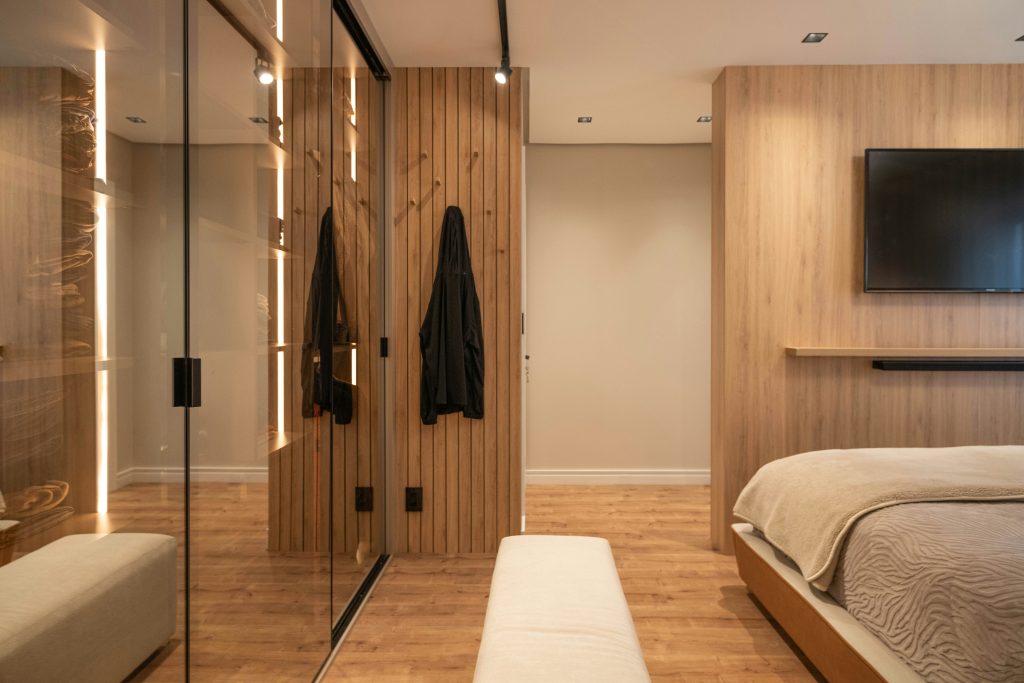
Minimalistic closet doors are no longer just a "trend" or "fad" in contemporary interior spaces; instead, they represent an overall design aesthetic that uses floor-to-ceiling panels without visible frames/handles, to create an appearance of being part of the adjacent wall when closed.
To create this clean look, many designers will use premium closet door customization options such as integrated J-pull handles, hidden pivot hinges, or track systems that are completely recessed into the drywall ceiling. Modern closet doors serve as "architectural chameleons" and minimize visual clutter to allow other design elements (i.e., a statement bed or a panoramic view from a window) to occupy the spotlight in the space.
Exploring Design Themes
When curating closet door design ideas, look to the existing architectural language of the home:
- New French Romanticism: Incorporate bifold or hinged doors having applied trim that has a gentle design and are painted with lighter colors like cream, mate, or sage (warm earth tones – off-white).
- Industrial Luxury: Choose sliding panel systems using black-matte steel frames with glass panels that are either smoked or have ribbed patterning.
- Japandi / Organic Modern Style: Use sliding or folding systems with natural oak wood slats that can be ventilated through or have a cane lattice in-between them, affording both ventilation and warmth/texture.
5. Implementation: Installation, Durability, and Maintenance
The journey from initial concept to a flawlessly functioning system requires meticulous execution during closet door installation, followed by an understanding of long-term care protocols.
Installation Protocols
A successful closet door installation begins with an perfectly square door opening. Closet Door is a sophisticated way to slide or collapse doors using both advanced geometric design and friction-free movement. When any variation in header height occurs, even a 1/4" variation, there will be binding of the doors and/or an appearance of gaps between doors.
- Level and Plumb – To ensure that the final installation goes seamlessly, the installer must confirm that the subfloor is also level and that all side jambs of the track are complete enough to be considered plumbed prior to installing tracks/pivots for doors.
- Structural Backing – When installing an oversized glass sliding system or any solid-wood sliding system, it is necessary to add proper blocking behind the drywall header to accommodate the weight of the downward loading action.
- Adjustment and Calibration – Most manufacturers of high-end closet sliding hardware kits have provided adjustment screws that can be used during installation to adjust the vertical and horizontal plane of each individual panel in order to achieve consistent alignment on the floor and the sides of both left and right.
Durability, Maintenance, and Common Errors
To secure maximum closet door durability, a preventative maintenance schedule should be followed. For sliding configurations, dust, lint, and pet hair can accumulate inside the lower closet door tracks, causing the rollers to seize or wear unevenly over time. Vacuuming out the tracks and applying a dry silicone lubricant once a year will maintain pristine operational smoothness. For folding or swinging variants, checking the tightness of the closet door hinges prevents the panels from sagging and rubbing against the frame.
6. The Definitive Decision: Closet Door Pros and Cons
We will create a concise, easy to understand framework of closet door types, comparing and contrasting their structural features to help both homeowners and project managers decide, which is the best closet door option(s) for them.
Sliding Door (Closet)
- Pros – This type of door has no clearance needed to enter space, great for long openings, attractive modern look; great chance of panels sagging.
- Cons – Half the closet can be utilized at once; Cabinets by yourself may have a blocked visual effect; requires complete depth of track at least equal to length of opening.
Bifold Closet Doors
- Pros: Exposes nearly the entire wardrobe interior for efficient organizing; minimal outward projection; classic, versatile styling options.
- Cons: More moving parts mean a higher necessity for routine maintenance; can occasionally jump off track if operated roughly; reduces internal hanging depth slightly at the outermost edges when folded.
Hinged Closet Doors
- Pros: Absolute 100% full exposure of the interior space; highly durable with zero track mechanics to fail; internal panel faces can be utilized for additional storage.
- Cons: Requires a substantial, clear floor area to swing open; restricted to narrow panel widths to prevent excessive leverage on hinges; can easily block walkways in smaller rooms.
7. Future Horizons: Innovations and Closet Door Trends
As home customization moves forward through 2026, closet door trends are evolving to address the demands of smart home technology, enhanced wellness, and architectural sustainability.
Smart Integration and Smooth Mechanics
Soft-close technology has been a traditional feature of luxury kitchen cabinets, thus making it a requisite of a high-end closet system. Top tracks may use magnetic catch systems and integrated dampers in order to keep panels from slamming, improving the mechanical shock to the structure and decreasing ambient noise levels in the home. In addition, voice-activated or proximity sensor activated mechanized sliding partitions are evolving from high-tech prototypes to actual high-end residential applications.
Non-Toxic and Green Products
Architects are specifying non-toxic VOC-free painted finishes more than ever, as well as using eco-certified, recycled wood-based composites and sustainably harvested bamboo or cork paneling in their designs. They are committed to enhancing their indoor air quality by making sure that the wardrobe facade meets or exceeds environmental standards.
Balancing Form, Function, and Space
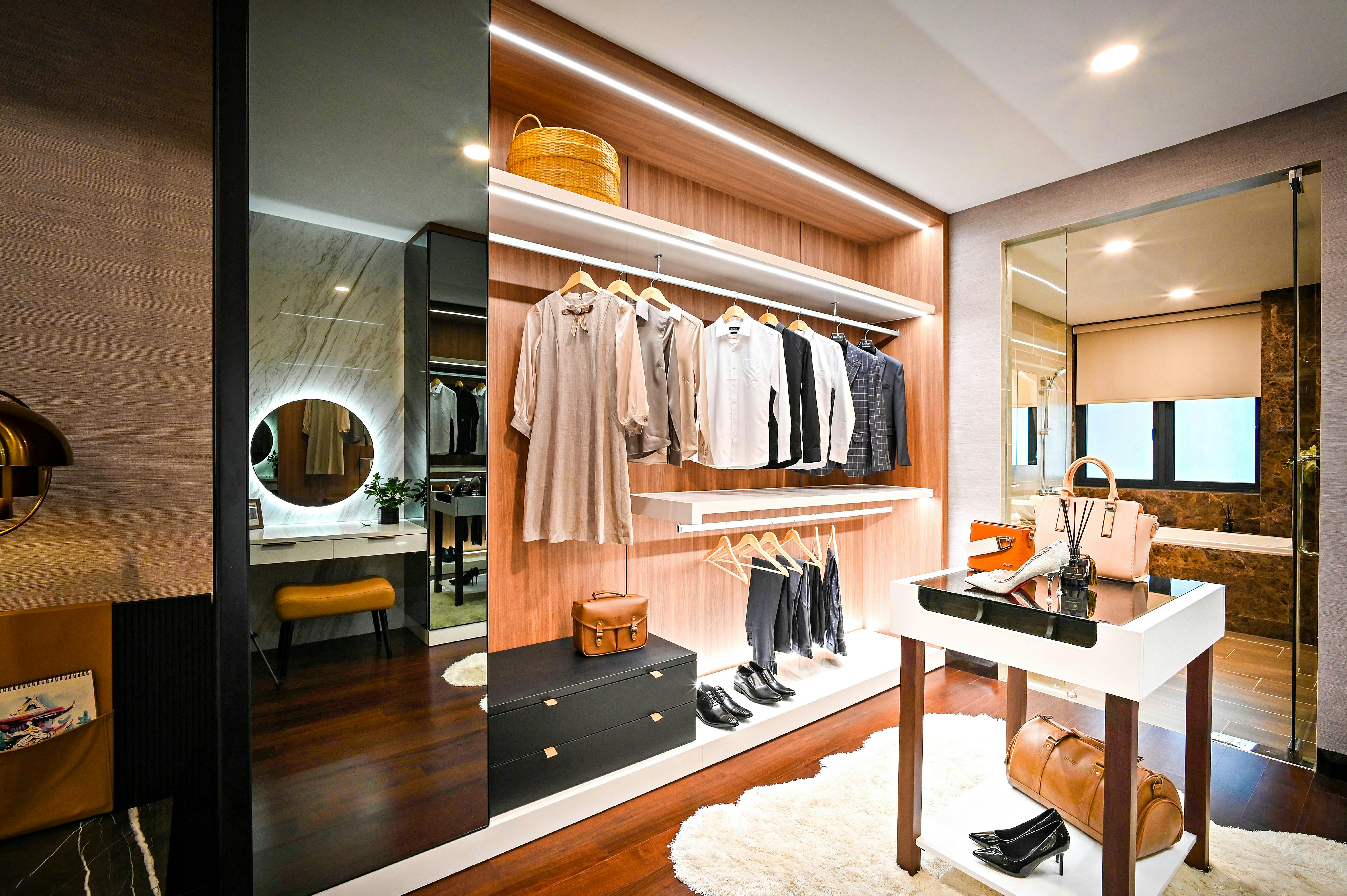
Choosing a closet door involves two main components: the dimensions of the closet door (design and/or the way that it connects to your bedroom) combined with how your closet door interacts with your lifestyle. Whether you opt for a sliding wall system with compact dimensions, an open folding door with the ability to see through to your closet, or a traditional swinging door with weight, your decision will incorporate the physical characteristics of your space as well.
This closet door guide will allow you to evaluate those functional variables that will allow you to create an elevated level of design in your own home. You will be looking at all of the options for a closet door (closet door materials, closet door hardware and closet door aesthetics) and ultimately how to create an elevated level of design in your home.When properly selected, detailed, and installed, a wardrobe entryway system ceases to be a mere partition; it becomes a daily pleasure, a testament to thoughtful engineering, and a permanent enhancement to your living sanctuary.
Related products
Armani
Chanel
How can we help you?
Get your free quote in 8 hours.