
Custom vs. Stock Cabinets: The Complete Kitchen Cabinet Buying Guide
Sammys
May 25, 2026
The Decision That Defines Your Kitchen
When renovating your kitchen, choosing from among custom versus stock kitchen cabinets is one of the most important decisions you will make; not only in terms of financial ramifications but also in terms of function. In addition to setting the look of an entire room, the cabinet design will dictate how the day-to-day operations of your kitchen will be carried out and how well the cabinets perform over years of constant use. Therefore, it is important to have a clear understanding of not only what the price difference is but also what tradeoffs would exist between the two (custom versus stock) in terms of quality, flexibility, timing and long-term value before making such a decision.
This guide will cover all aspects of this comparison; including the difference in construction and types of materials used for cabinets, the difference in lead times between custom and stock cabinets, and the installation differences between custom and stock cabinets, so that the decision you make when buying your cabinets will be based on fact not assumptions.
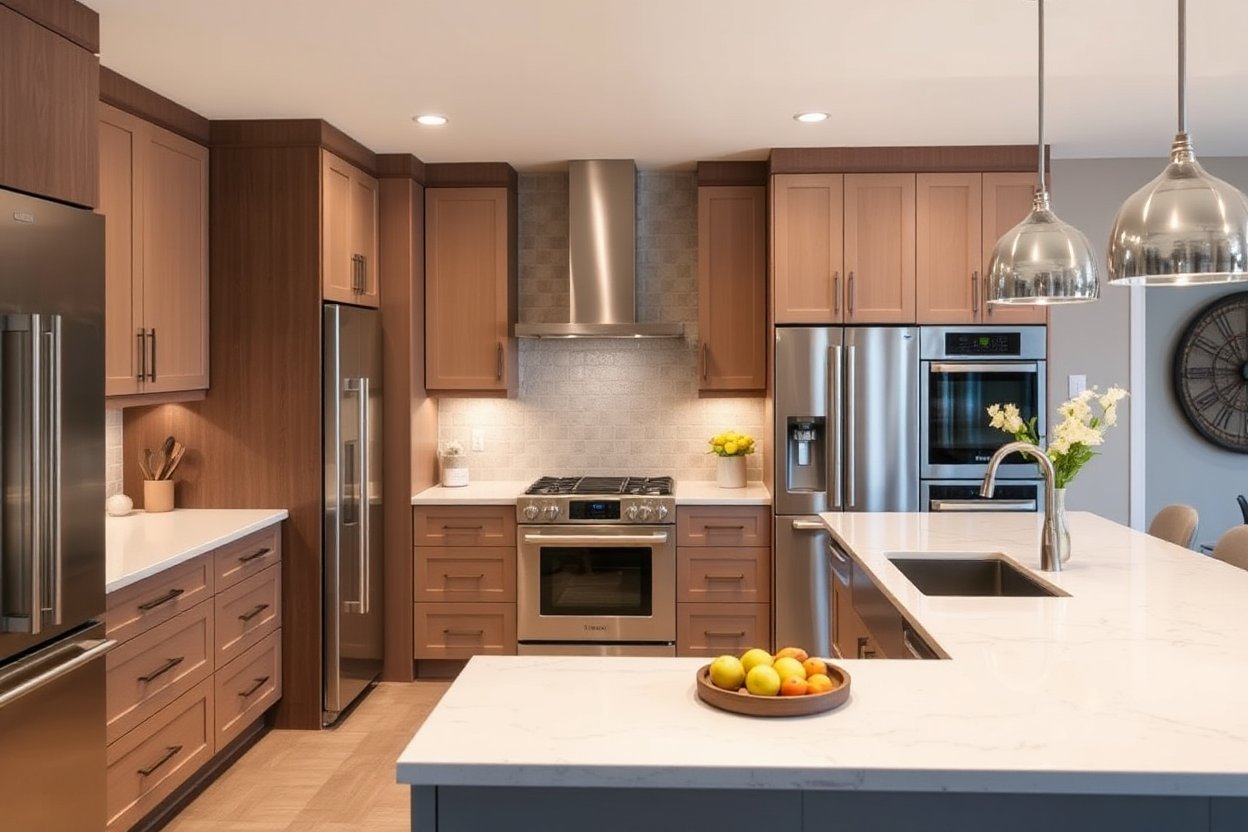
Understanding the Four Cabinet Categories
To evaluate the differences between the three types of kitchen cabinetry, it is helpful to understand the meaning of each type of cabinet. Before starting your evaluation it is useful to also understand what does "custom", "semi-custom", and "stock" mean?
When you are purchasing custom kitchen cabinets, they will be made specifically for your space by either a private craftsman or a manufacturing company. Every piece of the cabinet will be made after your order is placed, which means that no part of the cabinet is pre-built. For example: The cabinet dimensions will be made specifically for your kitchen including its layout and desired appearance.
When you are buying semi-custom kitchen cabinets, you are purchasing cabinets that are manufactured by a manufacturing company. These cabinets will be produced in a factory, just like stock cabinets. However, the semi-custom cabinets will offer many more customization options than stock cabinets, including additional size, finish, and additional interior options. Although these cabinets are produced in a factory, they will be built to order in the cabinet company's factory, and will not be stored in inventory.
The third category of kitchen cabinets is stock cabinets. Stock cabinets are produced in large quantities in standard dimensions and configurations and are available for immediate purchase at retail locations. This includes prefab kitchen cabinets, and ready-to-assemble cabinets (or RTA cabinets). RTA cabinets are sold flat, and must be assembled at the job site either by the installer or homeowner making RTA cabinets the least expensive entry to the kitchen cabinet market.
Understanding where each option sits on the spectrum of cabinet quality comparison, price, and flexibility is the foundation of a good kitchen cabinet decision guide.
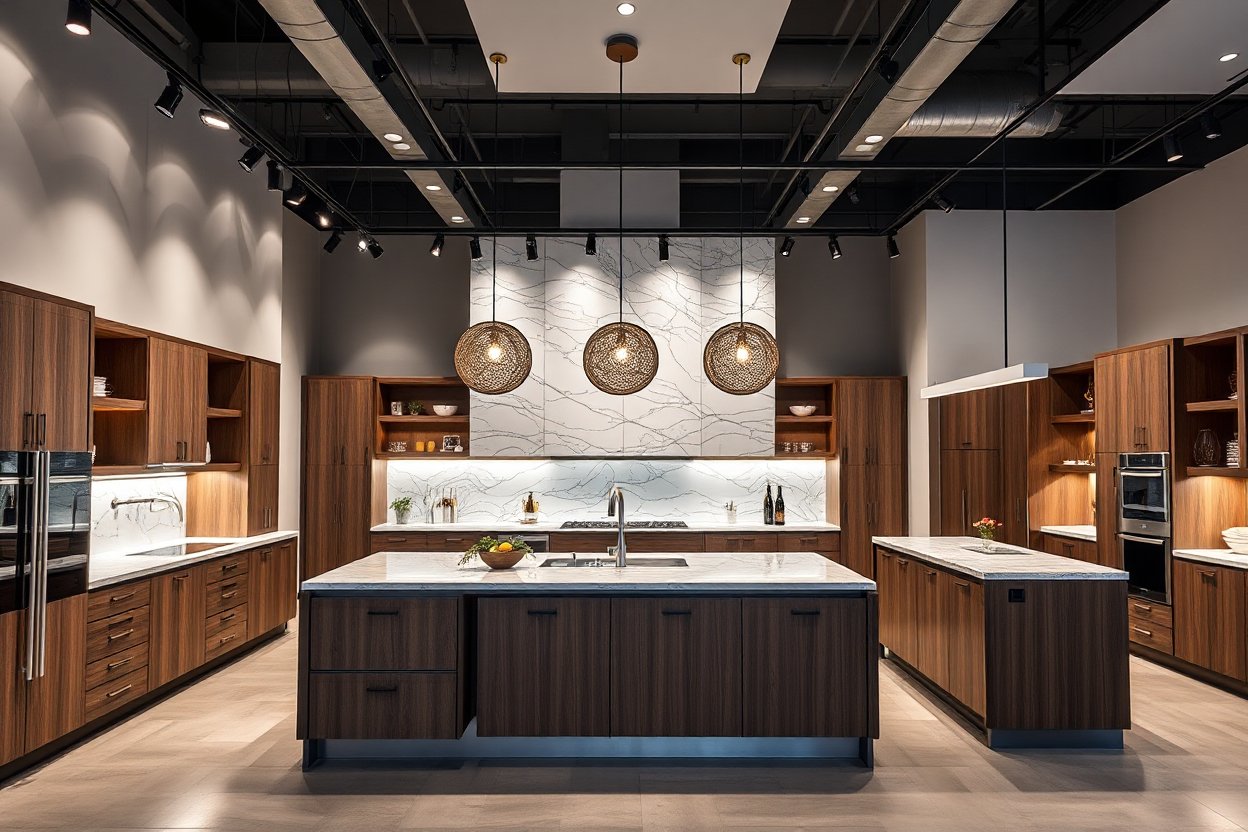
Cabinet Price Comparison: What You Actually Pay
Cost is usually the first filter applied in any cabinet decision, and the range across categories is substantial. A realistic cabinet price comparison looks roughly like this:
Cabinet Type | Typical Cost per Linear Foot | Full Kitchen Estimate |
Ready to assemble / stock | $60–$150 | $3,000–$8,000 |
Semi custom | $150–$350 | $8,000–$20,000 |
Custom | $300–$800+ | $15,000–$50,000+ |
Stock cabinet cost is the lowest in absolute terms, but the true cost of any cabinet system includes installation, modifications to make standard sizes fit a non-standard space, and the cost of replacement or repair when lower-grade materials fail earlier than expected.
Custom cabinet cost is highest upfront, but when evaluated over the lifespan of the kitchen, the cabinet long term value of a well-built custom system frequently justifies the investment. A custom installation built from quality materials and fitted precisely to the space may last 25–40 years with routine maintenance; a budget stock system may require significant work within 10–15 years.
Affordable kitchen cabinets from the stock and RTA categories make kitchen renovation accessible at lower budgets, and quality within this segment has improved considerably in recent years. At the upper end of the market, luxury kitchen cabinets — whether custom or from premium stock lines — deliver materials, finishes, and hardware that genuinely perform at a different level.
Cabinet Design Flexibility and Customization
This is where the cabinet design comparison between custom and stock options is most stark, and where the practical consequences of the choice are most felt in daily use.
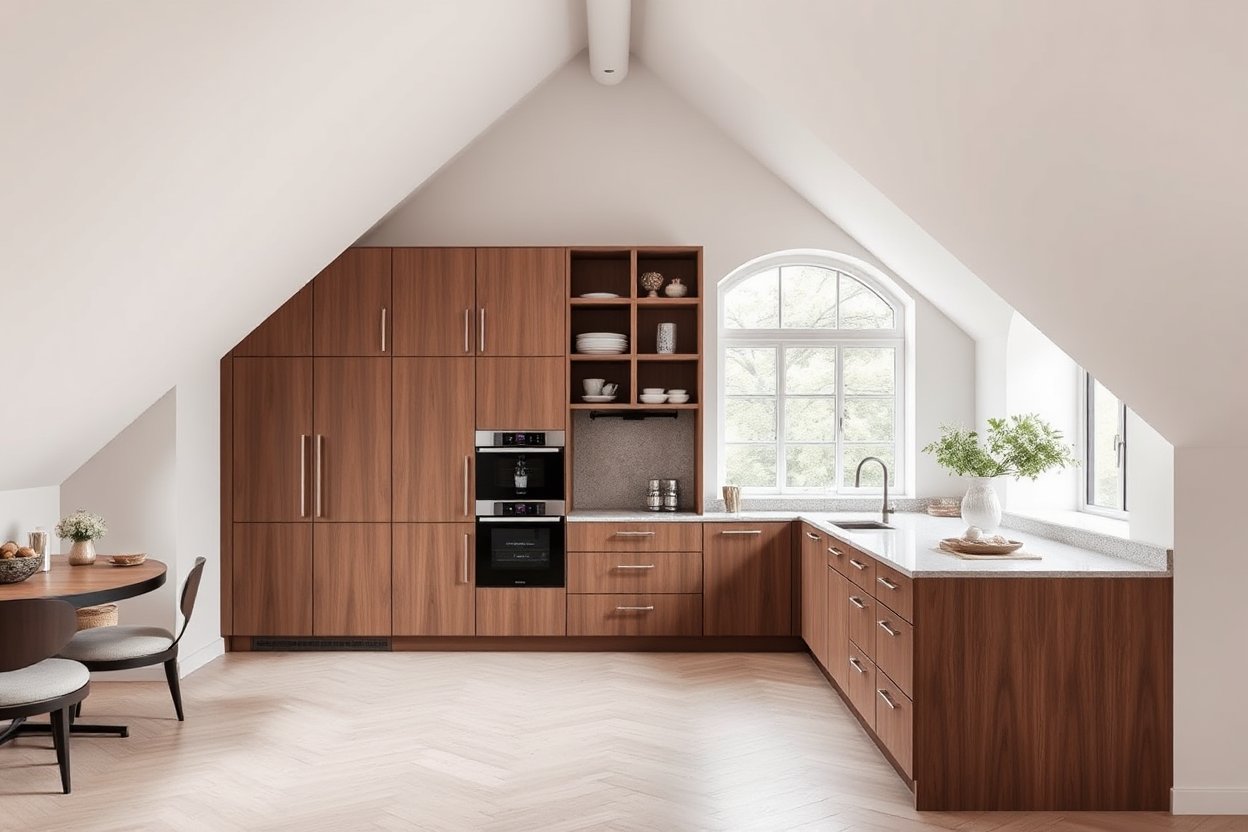
Custom cabinetry has virtually unlimited flexibility in terms of cabinet size. All cabinetry is made to fit the exact dimensions of your space — not all cabinets are built alike so there will be no filler strips to fill in odd gaps, no corners of wasted space, and no compromises to accommodate "nearest available" standard cabinet sizes. In an area where there are angled ceilings or non-standard ceiling heights, custom cabinet styles will utilize every inch of space.
Stock cabinets, by contrast, are manufactured in fixed width increments — typically in 3-inch steps from 9 to 48 inches wide. In a kitchen that happens to align neatly with these increments, the limitation is invisible. In a kitchen that does not — which describes the majority of real residential spaces — filler strips, modified end panels, or awkward dead zones become unavoidable.
Cabinet layout customization is similarly unrestricted in custom work. Interior fittings — pull-out shelves, drawer inserts, custom dividers, integrated spice racks, appliance garages — can be specified for any cabinet in any position. With stock cabinets, cabinet storage flexibility is limited to whatever accessory inserts the manufacturer offers for its standard box sizes, which rarely match perfectly.
Cabinet design flexibility also extends to door profiles, glass inserts, applied mouldings, and the treatment of visible cabinet ends — all areas where custom work can match the broader architectural language of the home in ways that stock products generally cannot.
Cabinet Construction Quality: What's Inside the Box
Cabinet construction quality determines how a cabinet performs under the mechanical stress of daily use — the thousands of door opens and closes, the heavy pots loaded onto shelves, the drawer slides cycled year after year.
- Box material. Quality custom and semi-custom cabinets use plywood for the cabinet box (carcass). Plywood’s cross-laminated construction gives it superior screw retention, moisture resistance, and resistance to racking under load. Many stock and RTA cabinets use particle board, which is cheaper but holds screws less securely, sags under sustained load, and degrades rapidly when exposed to moisture. This single variable — plywood versus particle board — accounts for more of the cabinet durability comparison gap between price tiers than any other factor.
- Joinery. Custom cabinets are typically assembled with dovetail or mortise-and-tenon joints, glue, and mechanical fasteners. Stock cabinets often rely on cam locks and staples. The difference in rigidity and longevity is significant.
- Cabinet hardware quality. Drawer slides and hinges are the mechanical components that fail first in any cabinet system. Custom and semi-custom specifications typically include full-extension, soft-close slides and concealed hinges from manufacturers like Blum or Häfele — components rated for 100,000+ cycles. Cabinets made from stock materials at the less expensive price points will typically have softer duty hardware, which could start to exhibit signs of wear within five years when used daily.
From a showroom or product picture perspective, cabinet craftsmanship comparison is challenging to see how cabinets are constructed and therefore what differentiates between a cabinet system that wears well and one that exhibits visible deterioration in less than 10 years.
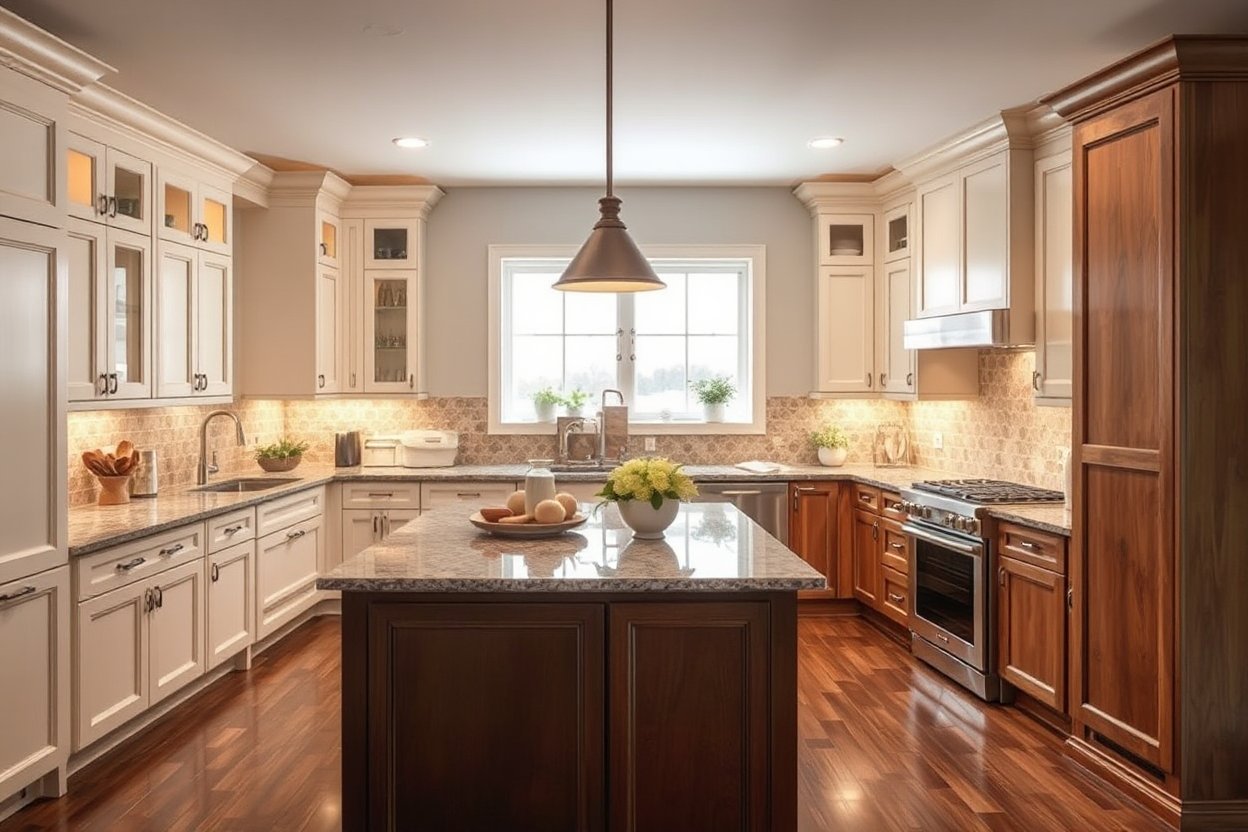
Cabinet Material Comparison and Finish Options
A thorough cabinet material comparison covers both the structural components discussed above and the visible surface materials — the doors, drawer fronts, and face frames that define the kitchen's appearance.
Cabinet finish comparison across the market reveals a similar tiering. Stock cabinets typically offer a curated range of finishes — commonly 10–30 options in painted, stained, and thermofoil — that cover the most popular choices but leave limited room for differentiation. Semi-custom ranges expand this to 50–100+ options. Custom cabinetry offers essentially unlimited finish possibilities: any paint color from any manufacturer, any stain on any wood species, lacquer in any sheen level, or specialty finishes like ceruse, wire-brushing, or hand-applied glaze.
Cabinet performance comparison between finish types is also worth understanding. Stained wood has a greater ability to hide scratches and dents than painted finishes however, there is a much easier way to fix these damages, making paint better suited for your cabinets. Thermofoil (vinyl film on MDF) finishes are tough, easy to maintain and appeal to many; however, the edges around the heat may gradually come off due to exposure from the heat and wear from usage. Solid wood will hold the value of your cabinets for years and be the best alternative to lacquer or conversion varnish unless the wood is processed correctly before being lacquered, due to the discrepancy in durability.
Cabinet Lead Time Comparison
Cabinet lead time comparison is a practical consideration that significantly affects project scheduling and often goes underestimated in renovation planning.
Cabinet lead time comparison is a practical consideration that significantly affects project scheduling and often goes underestimated in renovation planning.
- Stock and RTA cabinets: Available immediately or within days from retailer inventory. The short lead time of stock cabinets make them the best option for renovations when there is a tight timeline, or for when a previous cabinet fails and needs to be replaced quickly.
- Semi-custom cabinets: These typically take 4-8 weeks, from the time that the order is confirmed to the time that they are delivered, depending on the manufacturer and the complexity of the design.
- Custom cabinets: These typically take 8-16 weeks, with some of the more popular custom cabinet makers taking longer. Large and complex kitchens and those with non-standard dimensions, specialty materials, or integrated appliance panels may take longer than 16 weeks.
For homeowners who are doing a larger renovation and using contractors who will use multiple trades on the projects, the lead time for ordering cabinets typically will be the foundation for the entire renovation project schedule. Ordering too late is one of the most common and most costly mistakes in kitchen renovation — and it is one of the central points in any responsible cabinet installation guide.
Cabinet Installation Comparison
Cabinet installation comparison between stock and custom systems reveals meaningful differences in both the skill required and the time involved.
Ready to assemble cabinets place the most responsibility on the installer: boxes must be assembled before hanging, which adds time, and any errors in assembly affect the fit of the finished installation. The tolerance for error is lower because standard sizes leave less room for adjustment.
Stock kitchen cabinets in pre-assembled form are faster to install than RTA, but the fixed sizing means that achieving a professional result in a real kitchen — with its inevitable irregularities in walls, floors, and ceiling heights — requires skill in scribing, shimming, and fitting filler pieces neatly.
Custom cabinets are typically delivered ready to install, with each cabinet dimensioned precisely for its location. This makes the installation process more straightforward in complex spaces, though it also means that any measurement error made during the design phase is built into the cabinets themselves and cannot be corrected on-site.
Cabinet installation comparison also covers the question of who installs. RTA and stock cabinets are more commonly installed by general contractors or even experienced homeowners. Custom cabinetry is almost always installed by the cabinet company's own crew or by specialist finish carpenters, which adds to the overall cost but ensures accountability for fit and finish quality.
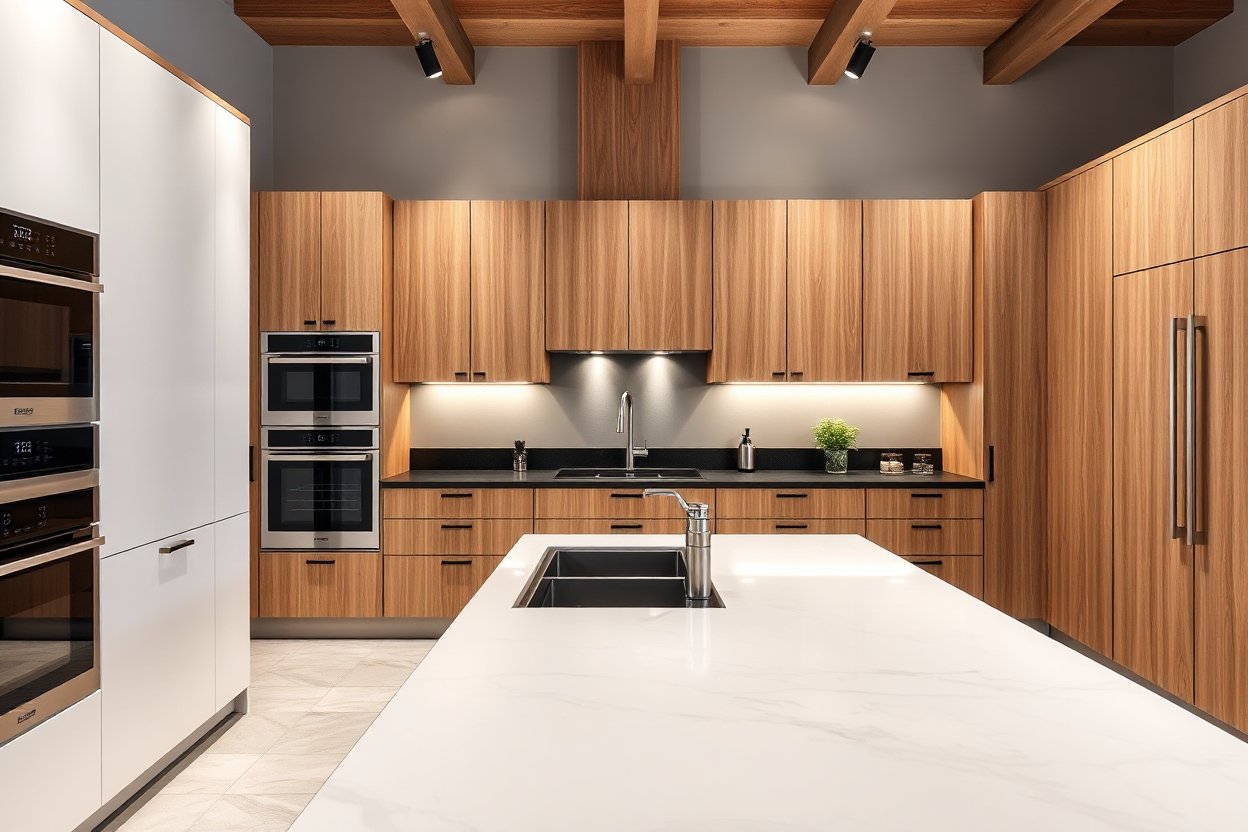
Custom Cabinetry Benefits vs. Stock Cabinet Advantages
A balanced cabinetry review of each option should acknowledge the genuine strengths on both sides.
Custom cabinet advantages:
- Perfect fit for any space, including non-standard dimensions
- Unlimited cabinet customization options for size, layout, finish, and interior fittings
- Superior construction quality as a standard (not a premium add-on)
- Designed to integrate precisely with appliances, countertops, and architectural features
- Higher resale contribution in mid-to-upper market homes
Stock cabinet advantages:
- Immediate availability — critical for fast-turnaround projects
- Lowest upfront cost, making renovation accessible at tighter budgets
- Widely available for inspection in showrooms before purchase
- Easier to replace individual damaged units years after installation
- Sufficient quality for rental properties, investment flips, or shorter-term ownership situations
Semi custom cabinets capture many of the custom cabinetry benefits — particularly around cabinet sizing flexibility and finish range — at a cost closer to the stock tier, making them the practical choice for the largest segment of the renovation market.
Making the Right Choice for Your Kitchen
The kitchen cabinet decision guide that emerges from this comparison is less about identifying a universally correct answer and more about matching the cabinet category to the specific context of each project.
Consider custom or semi-custom when:
- The kitchen has non-standard dimensions or architectural features that stock sizes cannot accommodate cleanly
- The renovation is intended to be the final kitchen for the foreseeable future
- The budget supports a higher upfront investment in exchange for superior long-term performance
- The design vision requires specific finishes, profiles, or interior configurations not available in stock lines
Consider stock or RTA when:
- The budget is a primary constraint and the priority is maximizing functional space within it
- The project timeline does not accommodate a 8–16 week lead time
- The kitchen dimensions are straightforward and align reasonably with standard cabinet sizes
If your building is either a renovation of a rental property or a home that is going to be sold soon, you should still follow the same principles when doing kitchen cabinet selection. Plywood boxes are better than particle board; so make sure all your cabinets are made from plywood. Choose quality drawer slides and hinges; remember to check for the durability of the finish before you purchase them. Finally, when purchasing cabinets, you should measure the space accurately so that your investment will be worth it in the long run.
The kitchen cabinet system, no matter whether they are affordable or luxury cabinets, will be a long term commitment. The time spent on careful cabinet design comparison, honest cabinet price comparison, and thorough cabinet performance comparison before the order is placed is the single most reliable investment you can make in the success of the finished kitchen.
Related products
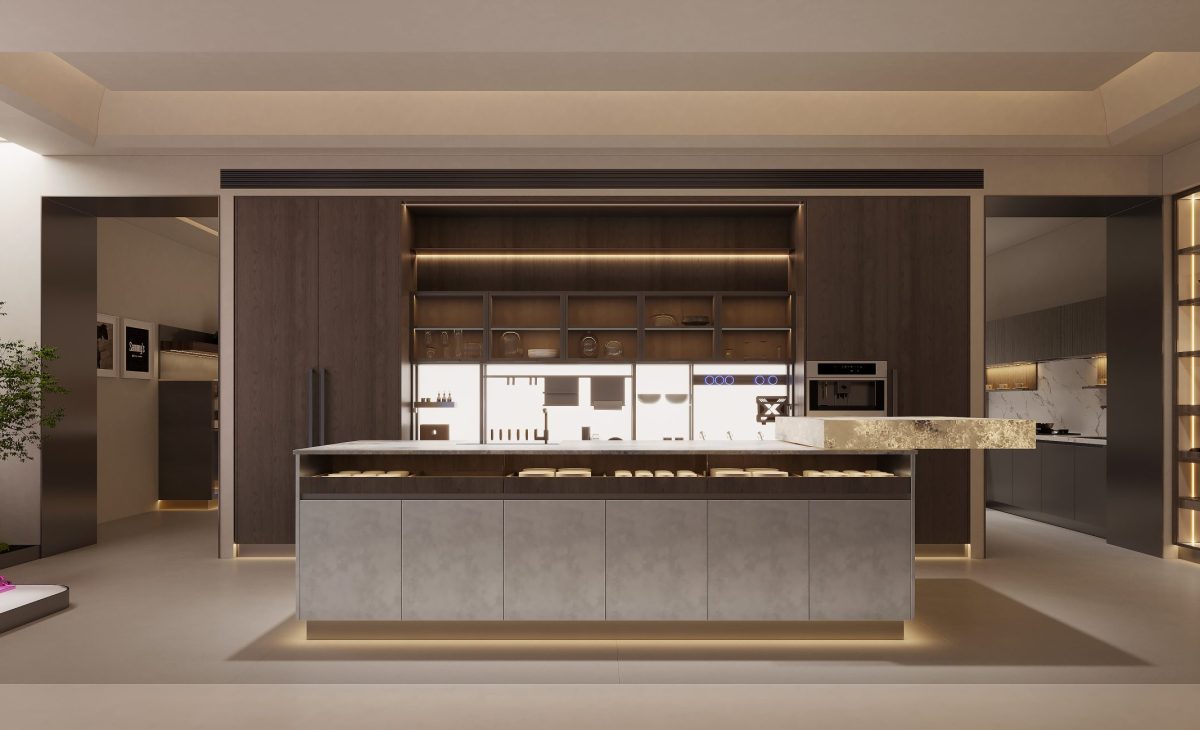
Vinium Lumina
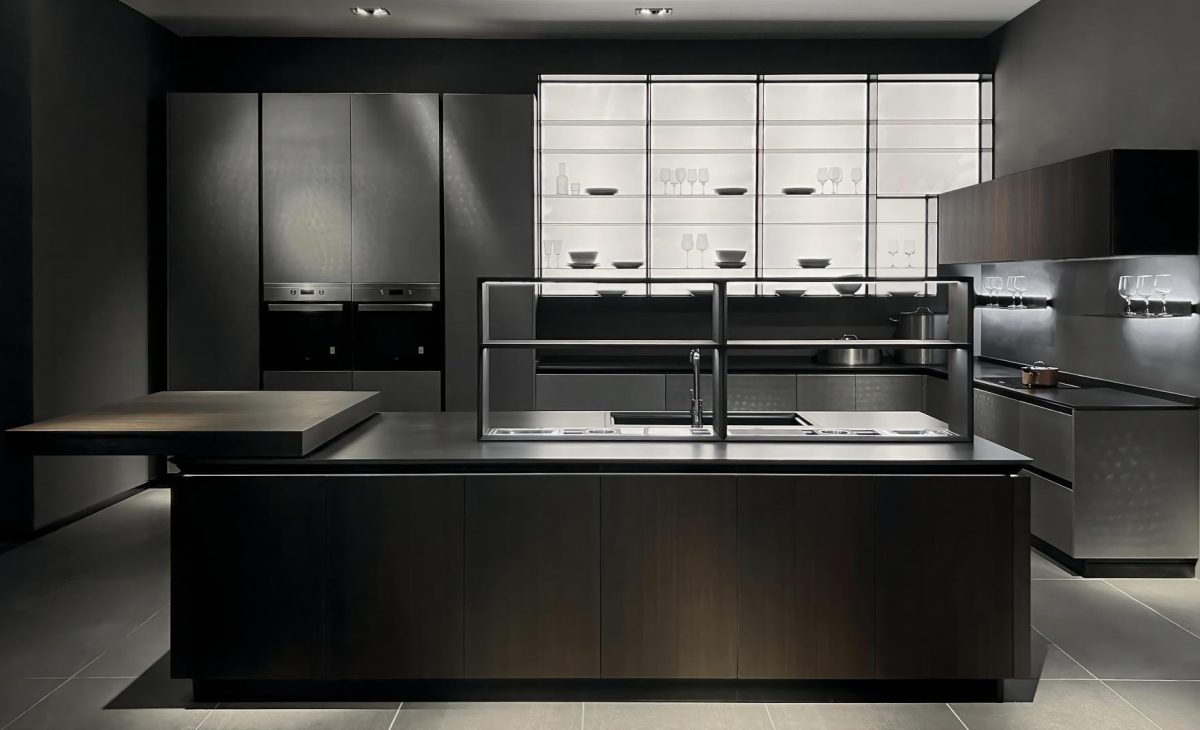
Lotus Phantom
How can we help you?
Get your free quote in 8 hours.