
Custom Closet Systems: Design, Dimensions, and Doors
Sammys
April 4, 2026
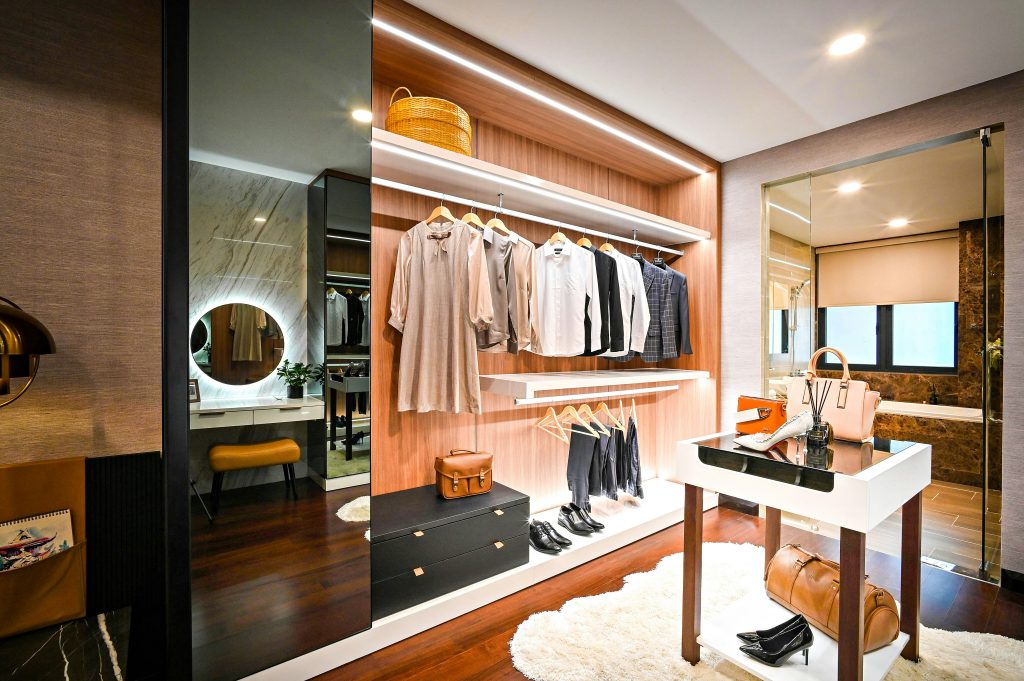
The closet is one of the most active areas in the home, but because it is usually an afterthought when it comes to the design of the home, it has typically been neglected by the designer. However, when you have a custom closet system that has been properly designed, it can change the way you start your day, relieve some of the stress and anxiety you feel every day, and also help to increase the overall value of your home.
It’s important for you to know how to design your closet system according to the principles that govern closet system design and good closet space planning and also know how to create a good closet door solution for your closet so that you are able to create an environment that is genuinely going to work for your own personal needs, regardless of whether you are filling out your walk-in or your reach-in closet.
This manual is a complete collection of information, from understanding the science of the ergonomics of size to understanding the aesthetic appearance of the modern finishes of cabinets in the closet and we are sure that this will give you everything you need to design your next closet in a way that you will find is both beautiful and practical for many years to come.
Understanding Custom Closet Systems
What Makes a System "Custom"?
In today's marketplace, the term ‘custom closet systems’ is often misused; true customization involves more than just picking a paint colour. It involves the intentional design of closet system components (shelves, hanging rods, drawers, pull-outs and accessories) in a way that meets the requirements of the user, the room being configured and the wardrobe to be stored there.
The modular closet system provides a compromise option. By using factory-built modules to create your system, you can mix and match numerous configurations, resulting in savings compared to completely custom closet storage systems. Because the modules are designed for off-the-shelf assembly, you will also have a high degree of flexibility to accommodate varying space dimensions.
Selecting between these methods depends on three criteria: your budget, the number of constraints on your available space and how long until you move out of your current domicile. Most people who own homes find that the perfect way to achieve flexibility, value for your money, and an enjoyable experience using a closet system is to utilize a premium modular closet system, finish it with properly chosen accessories for that type of system, and have it professionally installed.
Evaluating Closet System Options
Before committing to any design, it helps to evaluate closet system options across a common set of criteria:
| Criterion | Modular System | Built-In Custom |
|---|---|---|
| Cost | Lower | Higher |
| Lead time | Days to weeks | Weeks to months |
| Flexibility to reconfigure | High | Low |
| Fit for unusual | Moderate | Excellent |
| Resale appeal | Good | Excellent |
| Closet system durability | Varies by brand | Generally high |
Closet organization systems of all types share a common goal: to eliminate wasted space and make every stored item accessible without disruption to adjacent items. The best closet system solutions achieve this by respecting both the physical dimensions of the objects being stored and the natural movements of the human body retrieving them.
Materials and Durability
Closet system materials have a direct bearing on closet system performance over time. The possibilities for closet systems include:
- Particleboard (melamine) – inexpensive, comes in a variety of finishes, works well for residential use (may warp if exposed to water), and available at most home improvement stores.
- Plywood with laminate or veneer – stronger than particleboard, won’t sag as easily under weight, good for shelves and drawers that hold heavy items, and costs more than particleboard but less than solid wood.
- Solid wood – the most attractive option; will last many years; will expand and contract due to changes in humidity; very expensive.
- Steel (powder coated) -ideal for frames and hanging systems, strong and will not rust.
Closet system durability is also affected by other factors such as type of edge treatment, quality of fasteners used in assembly and load distribution by design. Any shelf that spans greater than 36″ should have either a center support or be made out of material rated for the amount of weight that will be placed on the shelf.
Planning Your Closet System
Importance of Closet System Planning
Good planning for closet systems begins long before you buy even one component. First, take an honest assessment of what you will put into the closet, then measure the space accurately. If you skip this step or both steps then you will almost certainly be unhappy with the results at the end of your closet renovation project.
The layout of the closet system drives the next subsequent decisions in terms of building the various components. For instance, putting double hang somewhere that doesn’t belong is going to waste vertical space; and underestimating the number of drawers needed will force folded items into places on the shelves that will not work. Closet system configuration layouts are a function of behavioural habits as much as they are a function of geometrical principles.
Closet System Customization Principles
Effective closet system customization follows a simple hierarchy:
- Identify categories. Group all stored items: long hang (dresses, coats), short hang (shirts, jackets, folded trousers), folded (sweaters, t-shirts), shoes, accessories, and miscellaneous.
- Quantify each category. Count items and measure the linear inches of hanging space and shelf space needed.
- Allocate zones. Assign physical areas of the closet to each category, placing most-used items at the most ergonomically accessible heights.
- Optimize the layout. Use closet system optimization techniques such as double-hang configurations, pull-out shoe racks, and corner carousels to recover otherwise dead space.
Built in closet systems excel at this final optimization step because they can be designed to exploit every inch of a non-standard space — angled ceilings, awkward corners, and structural intrusions included.
Closet System Functionality and Accessories
Closet system functionality is greatly extended by a thoughtful selection of closet system accessories. Beyond the basic shelf-and-rod configuration, modern systems can incorporate:
- Valet rods for planning outfits the night before
- Integrated LED lighting strips inside cabinets and above hanging sections
- Velvet-lined jewelry drawers with divided inserts
- Pull-out belt and tie racks
- Laundry hamper pull-outs
- Retractable ironing boards
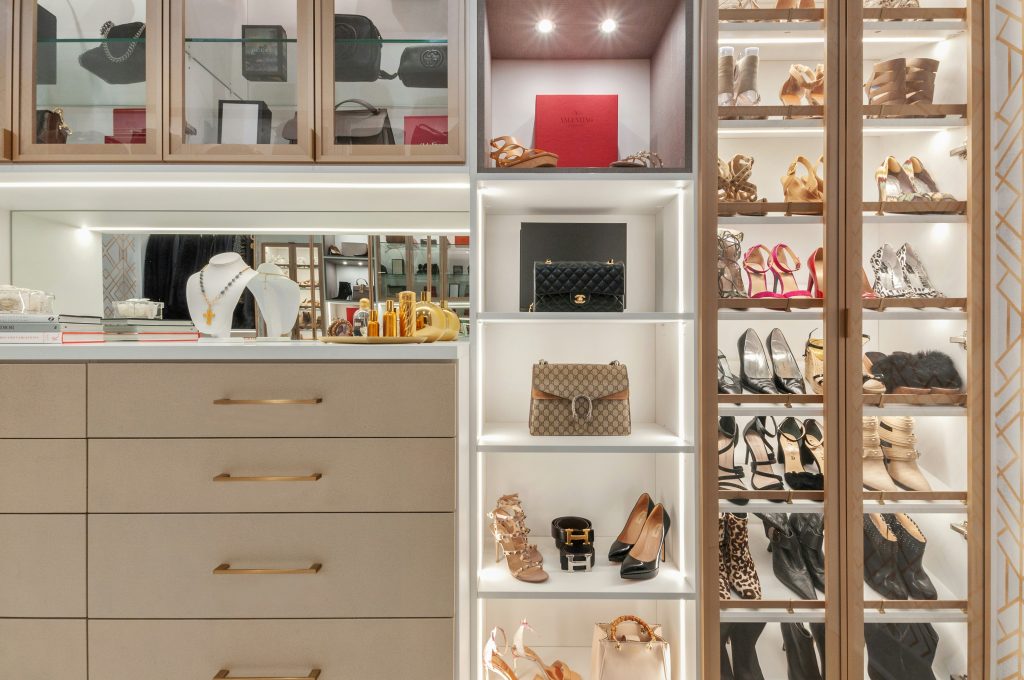
- Shoe cubbies with angled display shelves
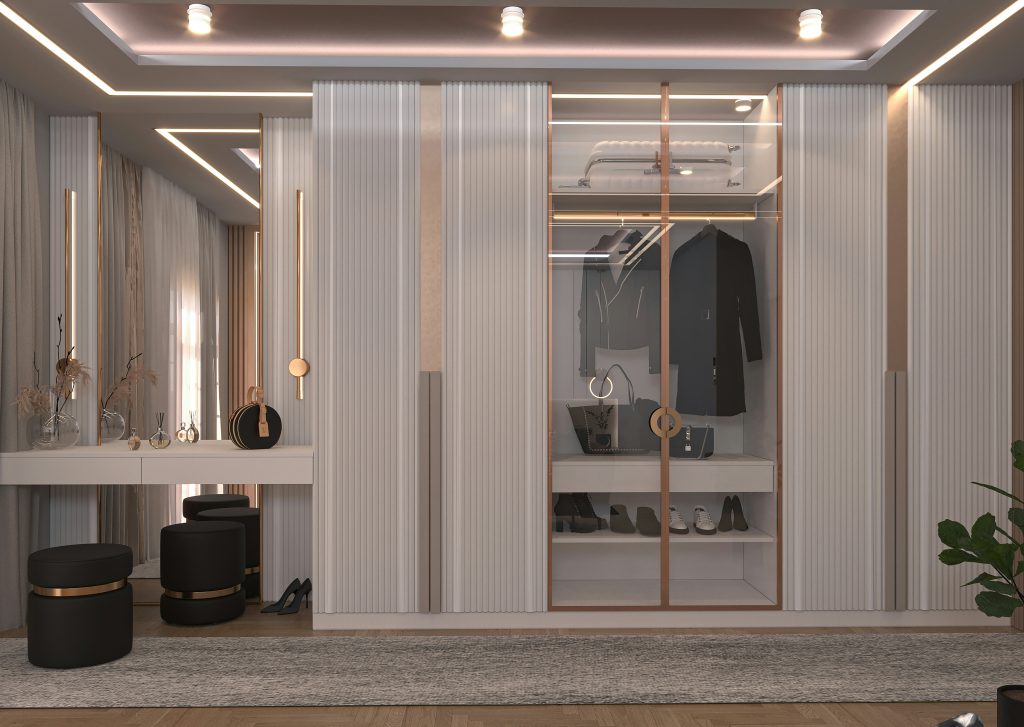
Each accessory should be evaluated not only for its appeal but for how it supports closet system functionality in daily use. A dramatic glass-front cabinet looks beautiful but may be impractical in a high-humidity bathroom-adjacent closet. Closet system design ideas should always be stress-tested against real habits.
Dimensions and Ergonomics
Why Dimensions Matter More Than Aesthetics
The single most important factor in closet system functionality is whether the dimensions are correct. Beautiful materials and premium finishes mean nothing if the closet shelf height forces you to double-stack items that should hang freely, or if closet drawer dimensions are so shallow that folded sweaters cannot lie flat.
A thorough closet dimensions guide addresses every zone of the storage space. The following standards represent industry consensus and ergonomic research.
Closet Size Standards: The Fundamental Measurements
Regarding closet size regulations, we begin with the three main measurements of every closet which are depth, height, and width.
Depth of Closets:
- For hanging clothing, a reach-in closet requires a minimum of 24 inches (61 cm) depth.
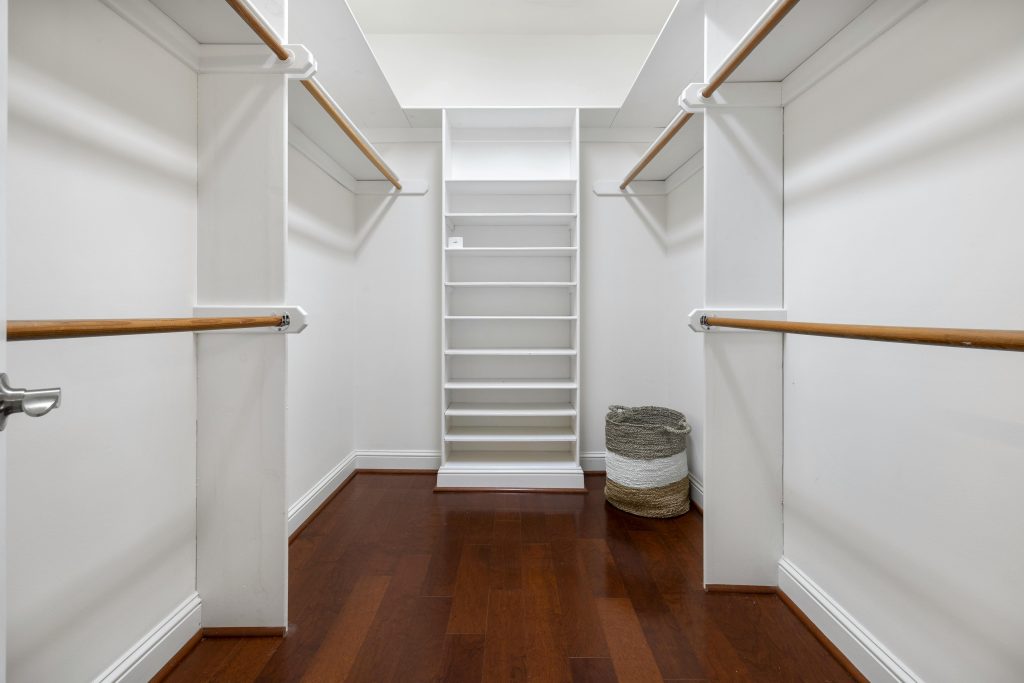
- For a walk-in closet, the minimum total width is 72-96 inches (183-244) to provide enough room for two rows of hanging with a center aisle.
- The depth of shelves (for folded items) should be 12-16 inches (30-41 cm).
- The depth of shoe shelves should be 10-12 inches (25-30 cm).
Closet height standards:
- The standard ceiling height is 96 inches (244 cm) and systems that are full-height use all of this height.
- The upper rod of a double-hang system is 80-84 inches (203-213 cm) off the floor.
- The lower rod of a double-hang system is 40-42 inches (102-107 cm) off the floor.
- The single-hang rod for longer items is 66-70 inches tall (168-178 cm).
Closet width measurements of a closet can vary greatly depending on application, but as a guideline, allow a minimum of 24 inches of hanging rod per section of clothing type (for example: pants, shirts, dresses) to accommodate a person’s entire wardrobe.
The Closet Measurement Guide in Practice
A complete closet measurement guide covers not just primary dimensions but also closet clearance standards — the minimum free space needed for comfortable use.
| Zone | Recommended Dimension | Notes |
|---|---|---|
| Closet hanging height (long) | 66–70 in / 168–178 cm | Dresses, coats |
| Closet hanging height (short) | 38–42 in / 97–107 cm | Shirts, folded trousers |
| Closet shelf height (eye level) | 60–72 in / 152–183 cm | Most accessible for folded items |
| Closet drawer dimensions (standard) | H: 6–8 in / D: 18–22 in | Shirts, accessories |
| Closet drawer dimensions (deep) | H: 10–14 in / D: 18–22 in | Sweaters, denim |
| Aisle clearance (walk-in) | 36–42 in / 91–107 cm | Ergonomic minimum |
| Closet depth standards (hanging) | 24 in / 61 cm | Prevents garments touching rear wall |
While all existing closet layout measurements based on custom closet dimensions, the measurements you use to create closet systems will also be applicable to existing spaces when building new modular systems. The closet planning dimensions you have listed above for closet planning are the ergonomic sweet spots as determined by professional organizers and interior designers through decades of practice.
Ergonomic Closet Design: Reaching the Right Zones
A well-designed ergonomic closet can have three distinct areas vertically segmented into zones for ease of accessibility.
- The primary zone (28″ to 60″/71 cm to 152 cm) is the most easily accessed zone, housing the majority of your daily dress wear, shoes and accessories.
- The secondary zone (above 60″/152 cm) is a little less easily accessed, as it will have your formal wear, season clothing and bundled up clothing you do not need to access every day.
- The tertiary zone (floor or lower than floor — 12 in) is the least accessible area for standing; it is best for your shoes, pull-out baskets, or fixed drawers that pull out from the base of the closet.
Closet design ergonomics also considers lateral reach. In a walk-in configuration, items within 18 inches of either side wall are easiest to access; corners require pull-out mechanisms or carousel systems to remain truly usable.
Closet functional sizing and closet layout proportions both improve when ergonomic zones inform the allocation of components. Closet proportions that respect the human body’s natural reach envelope will feel effortless in daily use, even when they don’t follow a visually symmetrical arrangement.
Closet Sizing Rules and Custom Dimensions
Rules regarding the sizing of custom closets differ among users; therefore custom closet sizing should be determined based on the individual, their clothes, and the available space within the closet area. For example, a person who is 6 feet tall will require garment rod placement at least two (2) or three (3) inches above where a standard rod would be located, while a person who collects shoes will need to allocate approximately 40 percent of all available storage to shoes, as opposed to the average shoe/s footwear allocation of 15-20 percent.
Shop all closets based upon how the user wants to store items inside it rather than by square feet or cubic feet. The best way to plan the closet storage dimensions is to actually measure individual representative articles of clothing (i.e. longest coat; tallest pair of boots; largest fold able sweater) so you know where to place your rod and/or shelf heights. Once you base your closet designs on real products, it’s always a better plan than taking Closet design measurements from a generic template.
Custom Closet Doors
The Door as a Design Statement
Customizing closet doors accounts for a significant extent of any closet renovation, due to their facing out toward the bedroom, hallway, and/or dressing area. The ideal closet door design provides visual unity to the room while providing the user with functional advantages (regarding concealment) as well as the ability to control closet access. Conversely, an improperly designed closet door may produce an awkward feeling in even the best-designed closet space.
Closet door designs include four decisions whose requirements prong together: opening mechanism, material, finish, and hardware. Each of these design decision can affect closet door functionality, aesthetic qualities, and dimensional properties.
Closet Door Types and Opening Systems
Closet door types can be broadly grouped by their closet door opening systems:
Sliding closet doors custom configurations are the most popular in contemporary homes. Panels glide on overhead or floor-mounted tracks, requiring no swing clearance. This makes them the premier space saving closet doors option in bedrooms where furniture placement is tight. The main limitation is that only one section of the closet is accessible at a time; closet door configuration should account for this by grouping items within each accessible section cohesively.
Bifold closet doors custom designs fold in half on a pivot-and-track mechanism, providing wider opening access than sliders while still using less swing space than hinged doors. They are particularly effective on closet openings in the 48–72 inch range. Closet door mechanisms for bifold systems have improved significantly in recent years, with soft-close hinges and top-hung designs that eliminate the floor track entirely for a cleaner aesthetic.
Hinged or swing doors — the traditional option — are well-suited to built in closet systems in larger rooms where swing clearance is not an issue. French door configurations add a sense of occasion to a walk-in closet entry.
Pocket doors disappear entirely into the wall cavity, making them the ultimate space-efficient solution where the wall construction permits. Closet door planning for pocket doors requires structural consideration during the rough-framing stage.
Materials and Finishes for Closet Doors
A wide range of closet door materials can be used for creating closet doors, including:
- MDF with acrylic or painted finish: These types of closet doors are the most commonly chosen and versatile option available as they can accept any color and can be used for minimalist closet doors and decorative style closet doors.
- Wood Veneer – The wood veneer closet doors open up the room and bring in a natural warmth to the room; they work well with the traditional and transitional styles.
- Glass Closet Doors (i.e., Clear, Frosted, Reeded) – The use of glass on the closet door allows the light from the room to pass through to the closet area, creating an open feel for the space. Glass is a key design element in a modern closet door installation, as glass provides a sense of space beyond just providing a door.
- Mirrors – Mirrors are the most widely used design option today in bedroom closet door designs; they give the impression of space beyond the actual size of the room, and provide a functional purpose for the owner.
- Aluminum panel frames: The majority of sliding system frames have an aluminum frame base that is available in matte black, brushed nickel and any number of other styles for closet door finishes.
Closet doors can also have additional closet door customization based on there surface treatment options. Any combinations of recessed shaker panel, flat slab, decorative mouldings and fluted glass panel inserts offer many possibilities for closet doors to match the overall design aesthetic of your home.
Closet Door Hardware and Installation
The details involved with closet door hardware illustrate the difference between an exceptional installation and an ordinary installation. Quality features such as soft-close mechanisms; concealed hinges; and brushed metal pulls promote an enjoyable tactile experience, while also providing a longer lifespan for the hardware and door system overall.
To install closet doors properly requires precision. Leveling tracks, ensuring panels are plumb, and maintaining a consistent gap between doors all are very important. The majority of sliding systems will need their tracks shimmed to account for any irregularities in the floor itself. A closet door systems with adjustable hanging brackets adds another level of finesse (as it allows for adjustment after installation); therefore, it is worth prioritizing in all specifications.
When measuring the closet door dimensions, attention must be paid to detail. Standard doors can range anywhere from 80” to 96” in height and numerous different widths based on the actual size or measurements of the openings. When calculating for the closet door configurations while using multiple panels for a closet, divide the overall width of the space by the total number of panels and then subtract any excess width created through hardware or wood overlap as determined by the manufacturer.
Closet Door Types: From Simple to Dramatic
Closet door styles can cover just about every look. Simple closet doors are typically flat, matte finished slabs, white or light grey. They work well in modern and Scandinavian style design. Black glass or aluminum frame modern closet doors create a bolder statement. Traditional panel profiles in painted wood suit period homes and more formal bedrooms.
Closet door aesthetics are also influenced by the surrounding room. A door that coordinates with the baseboard profile, window trim, and furniture palette will feel considered and intentional rather than merely functional.
Bringing It All Together — Closet System Optimization
From Planning to Installation
Closet system optimization is an iterative process. When closet systems are designed and tested using actual constraints such as room measurements, clothing to store, daily usage habits, and available funds, they produce the best results.
The steps to accomplishing this are:
- Accurately measure the area of the closet; note closet interior dimensions, ceiling height, and any obstructions.
- Take an inventory of your clothing items and calculate how much hanging and shelf space you’ll need.
- Use the closet space size rules and clearance standards to come up with a compliant layout.
- Select the components, materials, and finishes to meet your functional and aesthetic needs.
- Choose custom closet door solutions (type, preparation type, and hardware) and ensure the door works correctly for the closet opening.
- Finalize closet system installation sequence: always install the system before the doors, and the doors before any fixed lighting.
Closet system performance in the months and years after installation depends on how honestly the planning phase addressed real needs. Systems designed around idealized wardrobes — rather than the wardrobes people actually own — tend to underperform from the first day of use.
A custom closet system is not a luxury reserved for large homes or high budgets. At every price point and in every space, the application of sound closet system planning principles — correct closet dimensions guide data, thoughtful closet layout proportions, and considered closet door options — yields storage that feels effortless to use and satisfying to look at.
Whether you choose adjustable closet systems for maximum future flexibility, commission fully built in closet systems for a bespoke finish, or invest in beautiful sliding closet doors custom-fitted to your opening, the investment repays itself many times over in daily quality of life. The closet, finally taken seriously, becomes one of the most functional and personal spaces in the home.
Investing in Your Daily Peace of Mind
If you are interested in ideas for a small urban walk-in closet, there are many different aspects of high quality that can apply to both types of walk-in closets. A walk-in closet is one of the only places that is completely your own. It is the place you get ready to go out and also the place you come home to after a long day where you can relax and unwind.
If you want to increase the value of your home, creating a high-quality walk-in closet will not only provide your home with additional equity; it will also create a tidy, elegant, and respectable environment for everyone who uses it.
The best walk-in closets were designed using high-quality materials and were built based on the desires and taste of the owner, so always remember that when building your first walk-in closet or choosing materials for walk-in closet furniture; the best walk-in closets have a personal connection to what is inside them – therefore an investment in your wardrobe and the ultimate storage solution for your wardrobe.
Related products
Tango
Chanel
How can we help you?
Get your free quote in 8 hours.